For any Indian family, the Pooja room is not just a part of the house; it is the soul of the home. It is where we start our day with a bow of gratitude, where we seek strength during tough times, and where the family gathers during Diwali and festivals.
However, the reality of modern urban living often conflicts with our traditions. In cramped 2BHK or 3BHK apartments in cities like Mumbai, Bangalore, or Delhi, a dedicated “Pooja Room” is a luxury that few can afford.
Most tenants and homeowners are forced to compromise. We end up placing a small wooden shelf in a kitchen cabinet, a corner of the living room, or sometimes even on top of a bookshelf. While the devotion remains the same, the feeling of a sacred, separated space is often lost.
But you do not need a separate room with marble flooring to invite divinity into your home. You simply need to define the space visually.
Using sacred wall stickers, you can transform a plain, blank wall into a spiritual sanctuary. These designs act as visual anchors, instantly marking a specific area as “Holy” and “Untouched,” regardless of how small your apartment is.
Here are 7 Vastu-compliant ways to build a divine corner in a small flat.
1. The Vastu Foundation: The “Ishan Kon” Rule
Before you stick anything on the wall, it is vital to understand the “Energy Geography” of your home. According to Vastu Shastra, the most powerful direction for a Pooja space is the North-East Corner (known as the Ishan Kon).
If your North-East corner is blocked by a pillar or a heavy sofa, the visual weight of a heavy wooden temple might block the energy flow further. This is where wall stickers are superior to furniture. A wall sticker has zero physical weight. It allows you to place a divine symbol—like the Om or a Swastika—on the North-East wall without cluttering the floor space. It respects the Vastu rule of keeping the Ishan Kon “light and airy” while still establishing a spiritual presence.
2. Lord Ganesha: The Remover of Obstacles
In our culture, no new beginning happens without invoking Lord Ganesha. He is the Vighnaharta—the remover of obstacles.
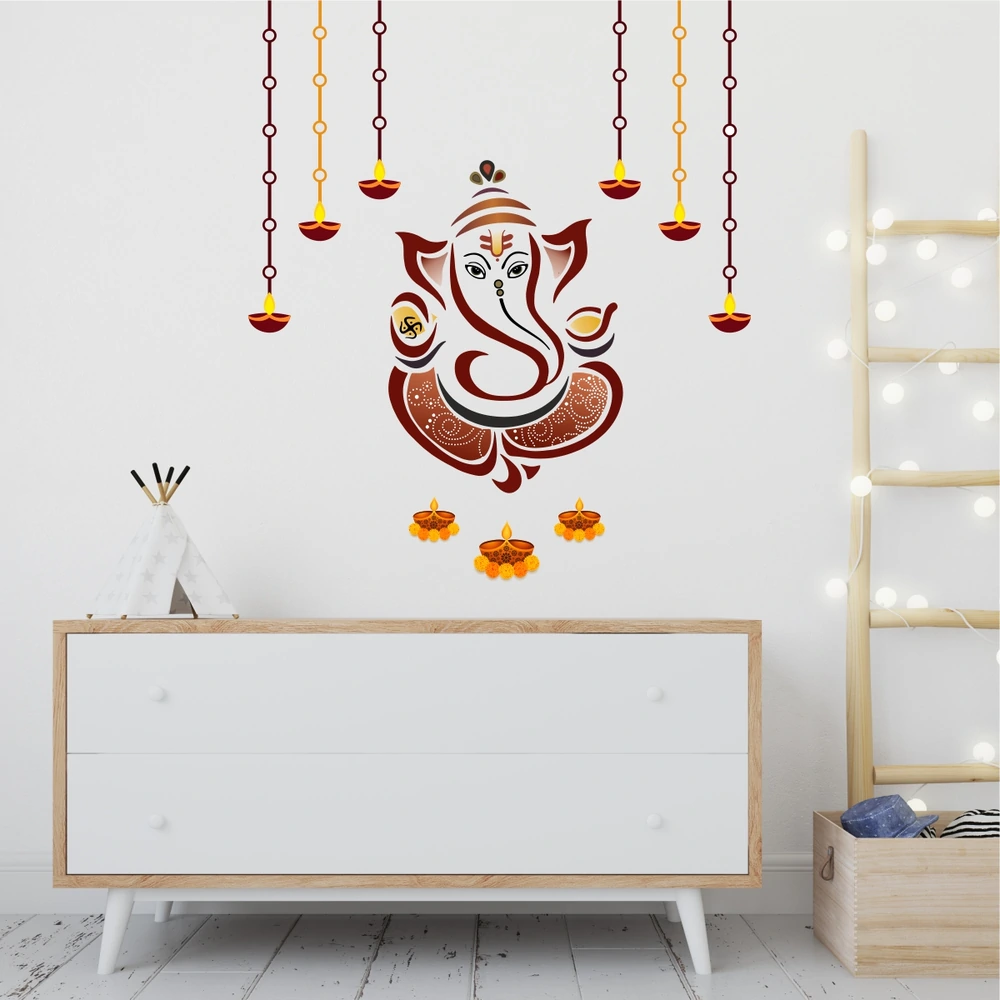
If your apartment entrance feels cramped or dark, or if your “Pooja Corner” is right next to the main door (common in small hallway layouts), a Ganesha wall sticker is the perfect guardian. Placing a silhouette of Ganesha facing the entrance acts as a spiritual filter, believed to block negative energy from entering your sanctuary.
- Design Tip: For modern homes, avoid the multi-colored, glittery posters. Opt for a sleek, single-color silhouette of Ganesha playing the flute or in a meditative pose. It blends devotion with modern aesthetics.
3. The Universal Sound: Om & Mantras
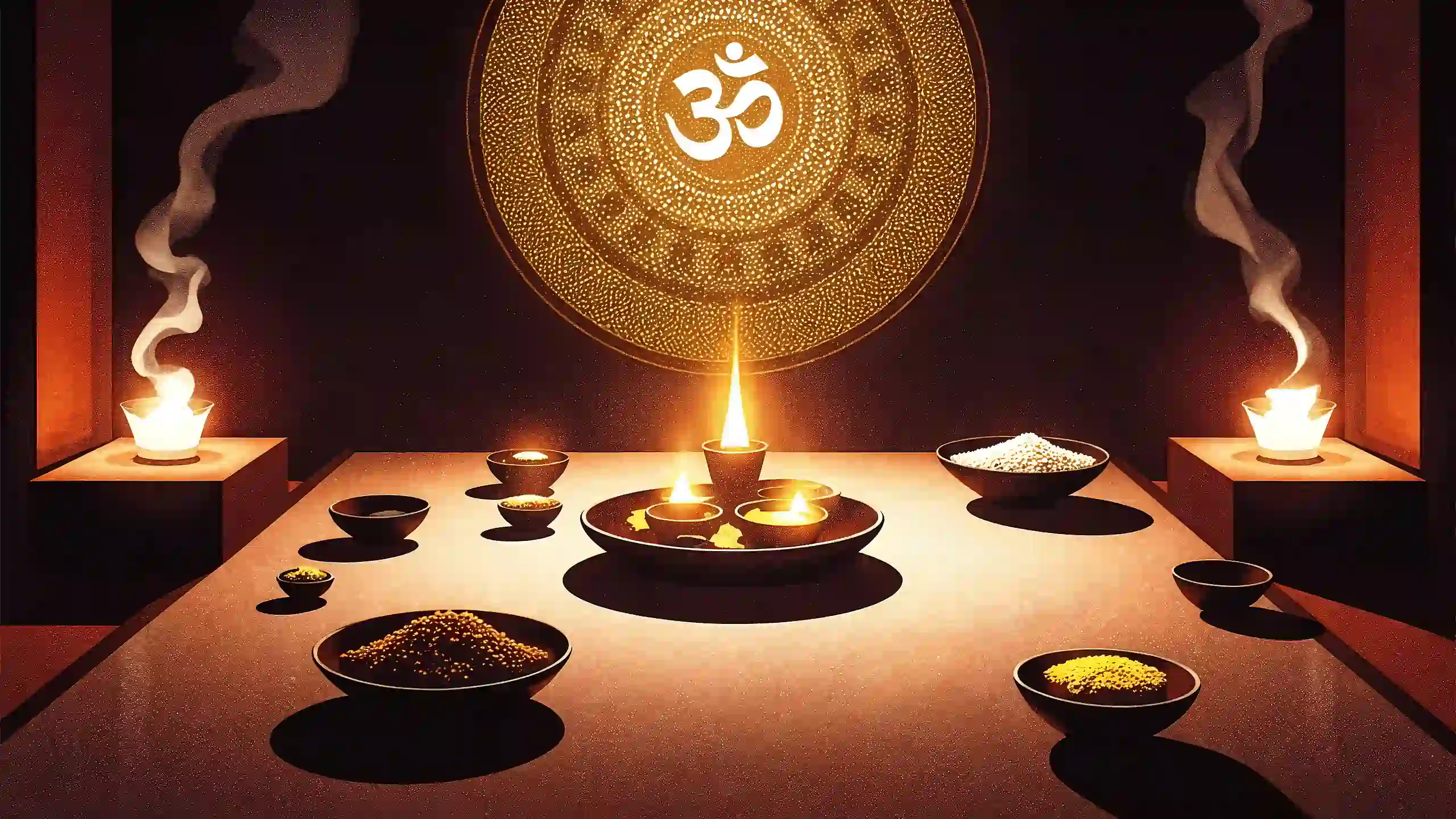
Sometimes, you don’t want a specific deity because you want the space to feel meditative rather than ritualistic. The symbol “Om” is the universal sound of the cosmos.
An Om Namah Shivaya sticker or a stylized Om symbol creates a focal point for meditation. When you stare at the symbol during your morning prayers, it helps center the mind and stop it from wandering. It turns a chaotic living room corner into a “Zen Zone.”
This is particularly effective for rental homes where you cannot install heavy idols. The symbol on the wall becomes the idol.

Om Namah Shivaya Wall Sticker
4. Radha Krishna: Devotion and Harmony
If your Pooja space is inside a bedroom (which is sometimes unavoidable in studio apartments), you must be careful with imagery. Vastu advises against placing “Ugra” (fierce) deities in the bedroom as they carry intense energy.
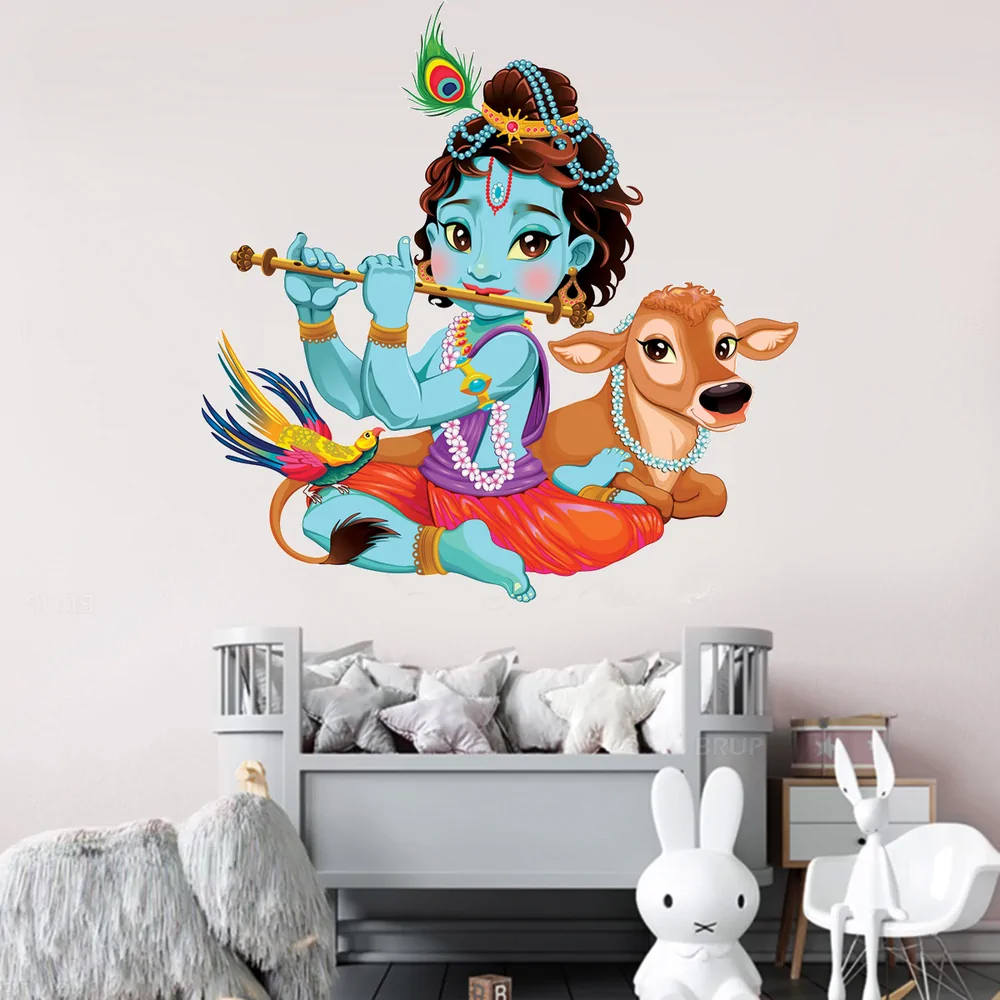
The ideal deity for a bedroom altar is Radha Krishna. Their energy is one of love, harmony, and soft devotion. A wall sticker depicting them with a flute or standing under a tree adds a sense of peace to the room without disrupting the restful energy required for sleep.
5. The “False Arch” Technique: Creating Depth
One of the reasons real temples feel grand is their architecture—the arches, the pillars, the domes. In a flat, you just have a flat drywall.
You can cheat this utilizing design. Use a wall sticker that mimics a Mandala Arch or a semi-circular traditional pattern. Place this arch on the wall, and then install a small floating wooden shelf directly in the center of the sticker bottom.
- The Illusion: When you place your small brass idols on the shelf, the sticker behind it acts as a grand “Prabhavali” (the decorative arch behind an idol). It tricks the eye into seeing a complete temple structure, turning a ₹500 shelf into a grand shrine.
6. Sacred Geometry: The Mandala
For those who prefer a more abstract or spiritual approach—often preferred by the younger generation or yoga practitioners—Mandalas are the answer.
A Mandala is a geometric configuration of symbols. In spiritual traditions, mandalas may be employed for focusing attention of practitioners and adepts, as a spiritual guidance tool, for establishing a sacred space, and as an aid to meditation and trance induction.
Placing a large, symmetrical Mandala on a white wall instantly marks that space as “different” from the rest of the house. It signals that this is a place for balance and symmetry, not for throwing your car keys or charging your phone.
7. The “Door” Shrine: Using Cupboards
If you simply have zero wall space, look at your furniture. Many people keep their idols inside a cupboard or a crockery unit.
The door of that unit is a blank canvas. By applying a Kalash, Swastika, or Shloka sticker on the outside of the cupboard door, you dignify the storage unit. It tells guests (and yourself) that “Inside this cupboard is something sacred.” It transforms a piece of furniture into a Mandir.
Conclusion
God does not need a large palace to reside in your home; He just needs a dedicated space where your devotion is the focus.
Whether you live in a sprawling bungalow or a compact studio apartment, pooja room wall stickers allow you to carve out that sacred niche. They help you reclaim a corner of your busy, modern life for peace, prayer, and gratitude.
You don’t need to wait for a bigger house to have a Mandir. You can create one today with our religious wall stickers